












In every family kitchen, there are hidden treasures: recipes scribbled on the backs of envelopes, faded index cards tucked into drawers, and half-remembered dishes passed down from generation to generation. These are more than instructions for meals. They are the flavours of your childhood, the aroma of holidays, and the stories told around the dinner table.
But too often, these memories are scattered, lost, or forgotten. What if you could preserve them all in one place? What if you could turn those fleeting notes into a recipe book for your own recipes, one that becomes a true family heirloom?
Here is how to get started.
Why your recipes deserve their own book
You do not need to be a professional chef to create a recipe book that matters. The meals you make every week, the special dishes for celebrations, the recipes handed down from your grandmother: all of these deserve a home.
A personal recipe book is more than a collection of ingredients and steps. It is a reflection of your lifestyle, your taste, and your traditions. Unlike digital notes or food blogs, a handwritten or beautifully recorded recipe book feels personal, tangible and lasting.
It gives you a chance to reflect on why you cook the way you do, and share that with the people you love.
The magic of a blank recipe book
There is something deeply satisfying about starting with a blank page. A blank recipe book gives you total freedom. You are not confined to rigid templates or dropdown menus. You can record your recipes exactly the way you want.
Some people divide their book into Starters, Mains and Desserts. Others go with Weeknight Favourites, Dinner Party Hits, or even by season. The beauty of a recipe journal is that it is yours. Want space for substitutions, wine pairings, or a memory beside each dish? Do it your way.
It becomes your kitchen companion, not just for now but for years to come.
Tips for turning your scribbles into an heirloom
Turning your notes into something special does not have to be overwhelming. Here are simple steps to help you create a recipe book you will be proud to pass down.
1. Start by gathering what you have
Look for recipes in old notebooks, text messages from family members, saved screenshots, or voice notes. You will be surprised how much you have already collected.
2. Add the stories behind the meals
Why is this dish special? When did you first make it? Who loves it most? These details give the recipe heart and help future generations connect with it.
3. Write in batches
Do not pressure yourself to complete the whole book in one go. Add recipes slowly, as you make them or as memories come back.
4. Use consistent formatting
Leave space for ingredients, method, notes and ratings. A consistent format makes the book easier to use over time.
5. Think beyond text
Include photographs, handwritten notes from relatives, or illustrations. This is your chance to be creative.
Choosing the right recipe journal
If you are turning recipes into a keepsake, the book you choose matters. A good recipe journal should be:
- Durable: hardcover or wipe-clean surface for kitchen use
- Well laid-out: enough space for ingredients, instructions and personal notes
- Beautiful: because something this special deserves to look the part
- Timeless: so it does not feel dated in a few years
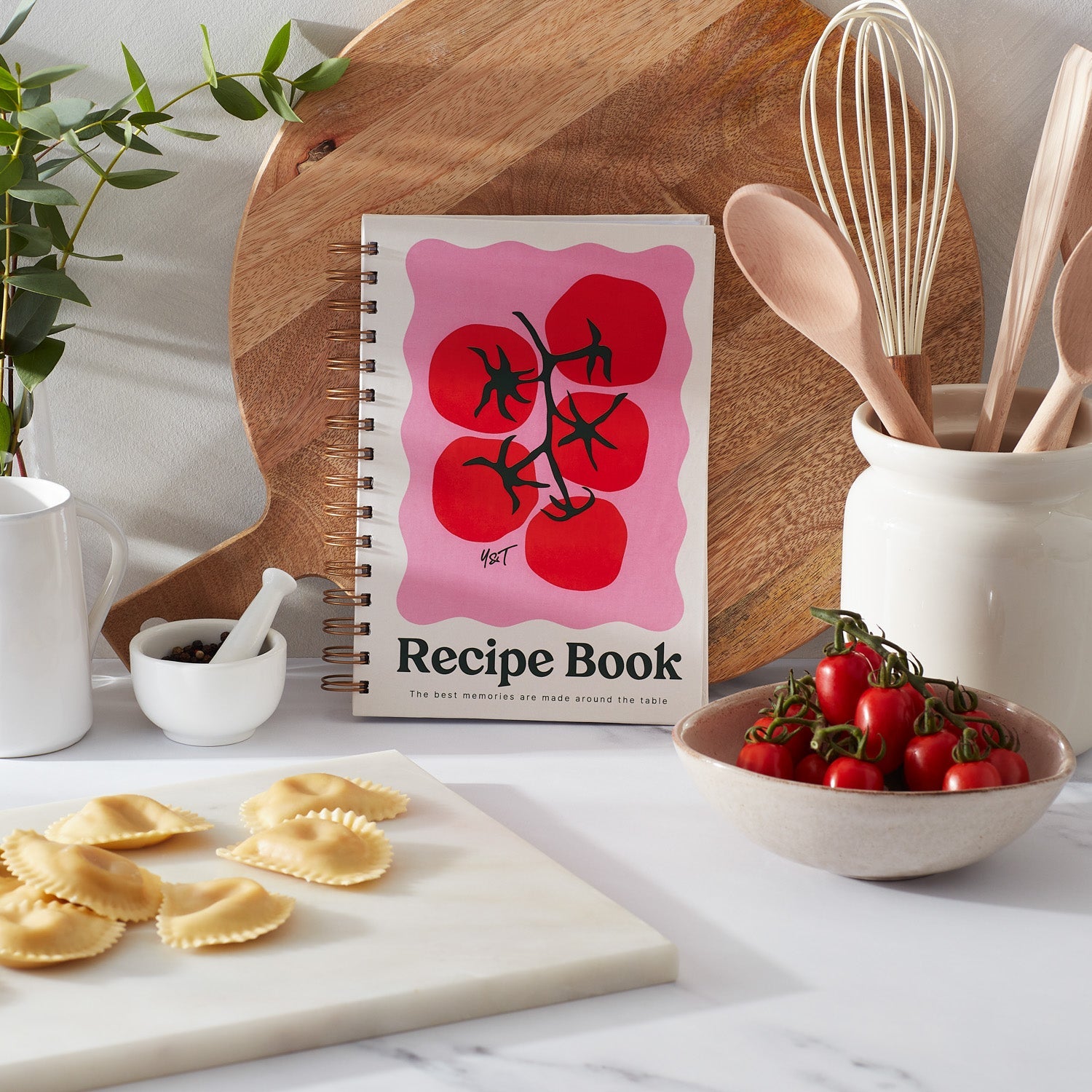
Our recipe journals are designed for exactly this: turning a blank recipe book into something you will treasure, whether you are a confident cook or just starting out.
A family tradition in the making
One of the most meaningful gifts you can give is a collection of your own recipes, lovingly written and organised for someone else. It could be for a child moving out, a sibling living abroad, or even your future self.
Years from now, someone might open your recipe book and feel instantly connected to you: your meals, your stories, your life. That is what makes it an heirloom.
Start your own recipe legacy
If you have ever wanted to bring together the recipes that define your home, now is the time. Whether it is a blank canvas waiting for your first entry or the final home for a collection years in the making, a recipe book for your own recipes is the most personal cookbook you will ever own.
For more kitchen inspiration, see our guide to what to do with empty notebooks or explore all journals.


