




















Your year in review is not just for the final weeks of December. Those quiet days between Christmas and New Year are a natural time to reflect, but journaling for self-reflection works whenever you need it. Mid-year check-ins, birthday reviews, or a Sunday reset all count.
Here is why a written year in review matters, what you need to get started, and prompts to guide you through the process step by step.

Why journal your year in review?
You do not have to write your year in review by hand. You could type it out, talk it through, or simply think back. But picking up a pen often helps you go deeper. Here is why.
Take a deep dive into your year
Want to understand what the last 12 months meant, what happened, and how you feel about it? Reflective journal writing helps you process more slowly than scrolling back through a camera roll. Research suggests that writing supports deeper learning, better retention, and more thoughtful processing of experience.
Dip in, then dip out
A year in review does not need one marathon session. Reflect on the first half of the year one day, then return to the second half when you have energy. Break it into chapters if that feels easier.
Wander down memory lane
One of the best things about journaling your year in review is that it stays on the page. You can review this year, then peek at what you wrote twelve months ago and see how far you have come, even when progress felt invisible at the time.
What you need to journal your year in review
You do not need a fancy set-up, but a calm space helps. When you feel cosy and unhurried, you are more likely to stay with the process. Snacks are optional but recommended.
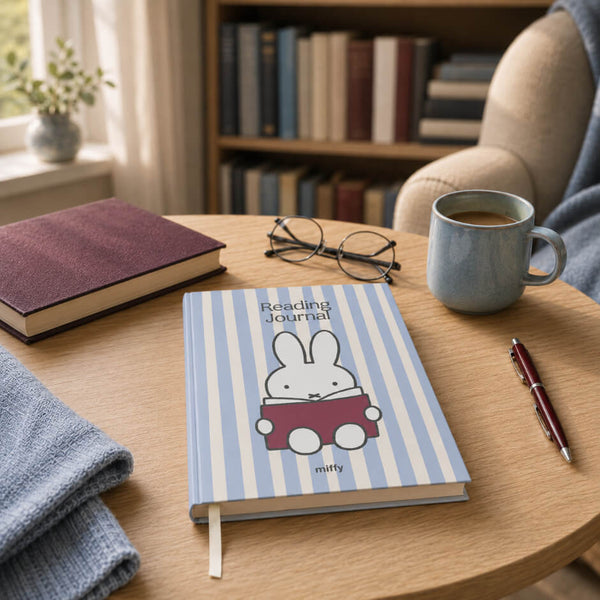
- Your journal — a lined notebook is ideal for long-form reflection, with enough space to write freely
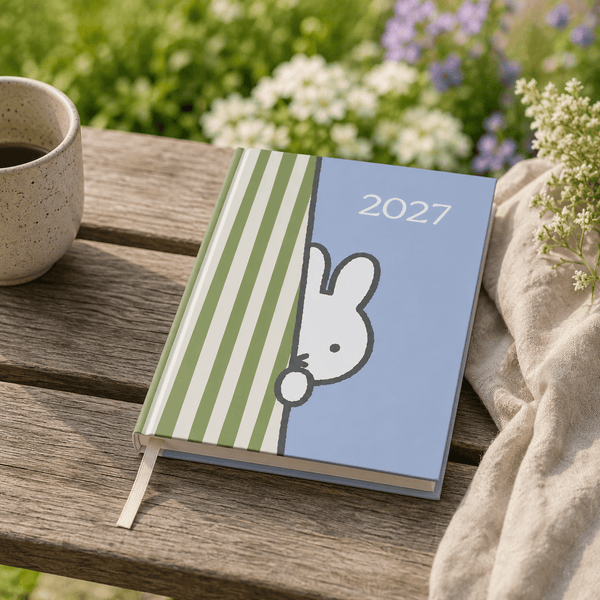
- Your planner — if you tracked goals in a daily planner, keep it nearby to revisit the intentions you set at the start of the year
- Your favourite pen — choose something comfortable for longer writing sessions
- Your comfiest corner — give yourself time and a place where you will not be interrupted
- A playlist (optional) — pick a soundtrack that matches the mood you want for reflection

How to journal your year in review
Everyone has their own journaling style. This is a reliable starting point if year-end reflection is new to you. If you already have a process you love, keep it, and borrow any prompts below that resonate.
- Before you begin, ask what you want to learn. What are you hoping to uncover? Why are you doing this review now?
- Write out the questions and prompts that will help you answer those intentions
- Plan a few reflection sessions rather than forcing everything into one sitting
Journaling prompts for self-reflection
Step 1: Review your year’s goals
Twelve months ago, you started the year with goals or intentions. They may have been written down in a planner, or kept loosely in mind. Either way, now is your chance to look back with hindsight.
Our guide to types of goals walks you through yearly goal reflections. These prompts work in any journal:
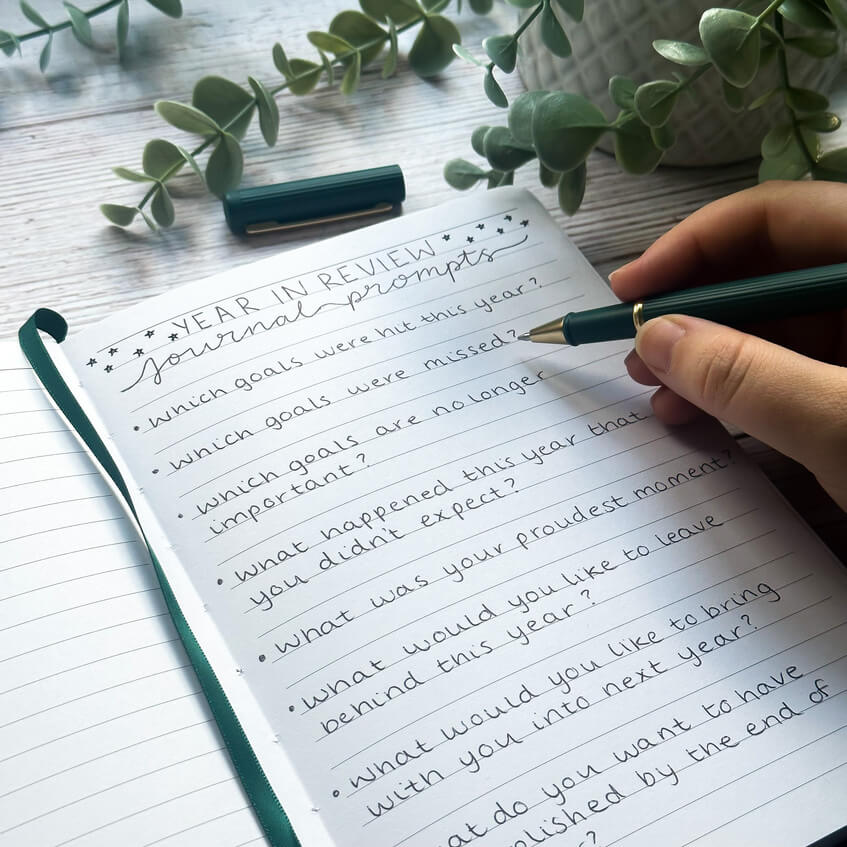
- Which goals were hit this year?
- Which goals were missed?
- Which goals are no longer important?
- What is your new focus for the next year?
See our guide to types of goals if you want to turn next year’s focus into clear priorities.
Step 2: Tune into how you feel about the past year
Now that you know what happened, explore how you feel about it. Any emotion is valid. You might feel frustrated that plans shifted, or proud despite missed targets. Try not to focus on how you “should” feel. Notice what your mind is telling you.
- How did you feel as you worked towards your goals?
- What did you crave more of this year?
- What did you crave less of?
- What made you feel supported along the way?

Step 3: Reflect on surprises
Every year brings the unexpected. Some surprises are welcome; others are harder. What matters is what you learned from them.
- What happened this year that you did not expect?
- Why did it happen?
- How did you feel about these surprises?
- What did you learn about yourself?
- What was your proudest moment?
Step 4: Choose what to take with you (and what to leave behind)
This is an empowering part of the process. You decide what to carry into the next chapter and what to release.
- What would you like to leave behind this year?
- How can you support yourself to leave it behind?
- What would you like to bring with you into the next year?
- What could help you do that?
- What new things, people, or feelings would you like to invite in?
- How can you extend those invitations?
Step 5: Look forward to the next year
Your reflections now support the dreams you set for what comes next. If narrowing goals feels difficult, start by imagining without limits. Picture how you want the year to feel, then break that vision into smaller, manageable steps.
- How do you want next year to feel?
- What do you want to have accomplished by the end of it?
- What feels realistic for you?
- What can you control?
- What can’t you control?
- How can you break those goals into milestones along the way?
Take it step by step. Give yourself more time than you think you need. And celebrate what you have already navigated. You have got this.
Get the journal for self-reflection
A dedicated journal makes it easy to return to your year in review next December, or whenever you run this ritual again. Pair a lined notebook for reflection with a daily planner for the year ahead, or explore wellness journals if you prefer a guided format.

However you reflect, the point is honesty on the page. Your future self will thank you for taking the time.