
Your Cart is Empty








The Ultimate Guide to Moon Journaling (+ Prompts)

Have you heard of moon journaling? If you are interested in the holistic or spiritual side of wellbeing, you may already be a fan. But even if you do not consider yourself a spiritual person, moon journaling can still help you understand how your mind, body and emotions ebb and flow through the month.
In its simplest form, moon journaling is journaling your feelings in line with the phases of the moon. Modern life often expects us to feel and perform the same way every day. The reality is that our emotions can vary wildly from one day to the next. Moon journaling gives you a gentle framework for noticing those shifts and responding with more care.
What is moon journaling?
One explanation for emotional change is the influence of the moon. We know the moon guides ocean tides through gravitational pull as it orbits Earth. Many people believe that same rhythm can influence how we feel too.
Moon journaling is a way of understanding and working with that rhythm, so you can give your mind and body the support they need to thrive. It pairs naturally with other reflective practices such as morning pages, habit tracking, or a simple mood tracker spread in your bullet journal.
What science says about the moon and your mood
We love looking at what the research says. The idea that the moon can influence human behaviour dates back to ancient Rome and Greece. The word “lunacy” even comes from the Latin lunaticus, meaning “moonstruck”.
Modern studies have produced mixed results, but researchers observing patients in psychiatric clinics have noted that mood and sleep patterns sometimes track the rise and fall of the tides, which are driven by the moon’s gravitational pull. Whether or not you believe in a direct lunar link, journaling by moon phase still gives you a regular checkpoint for reflection.
The benefits of moon journaling
1. You understand your emotions more clearly
Even if you are unsure about the moon’s influence, moon journaling helps you see how your emotions vary through the month. You can start spotting triggers or external factors that affect your mood and wellbeing.
2. You discover new ways to take care of yourself
Once you notice patterns, you can look for practical ways to support yourself. Perhaps anxiety peaks at a certain point each month, or plans always seem to hit a snag at the same stage. Moon journaling encourages you to track those themes and respond with intention.
3. You feel connected to something greater
In an era when loneliness is common and social media leaves many of us craving deeper connection, moon journaling can feel grounding. There is something calming about surrendering to a natural rhythm and releasing the pressure to feel in constant control.

How to get started with moon journaling
Get a lunar calendar
You need relatively few tools, but a lunar calendar is essential. It tells you which phase the moon is in, so you know which prompts to use and how to track the cycle through the month.
My Moon Phase is a useful free app, available on Apple and Android. It shows the moon cycle, rise and set times in a clear interface, and whether the moon is likely to be visible where you are.
It is also worth developing the habit of looking out of the window when you can. Apps are helpful, but spotting the moon yourself builds a different kind of connection to the cycle.
Choose a moon journal
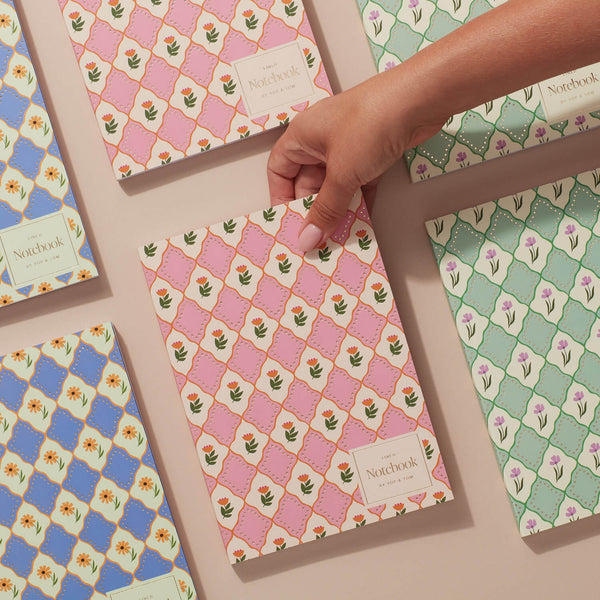
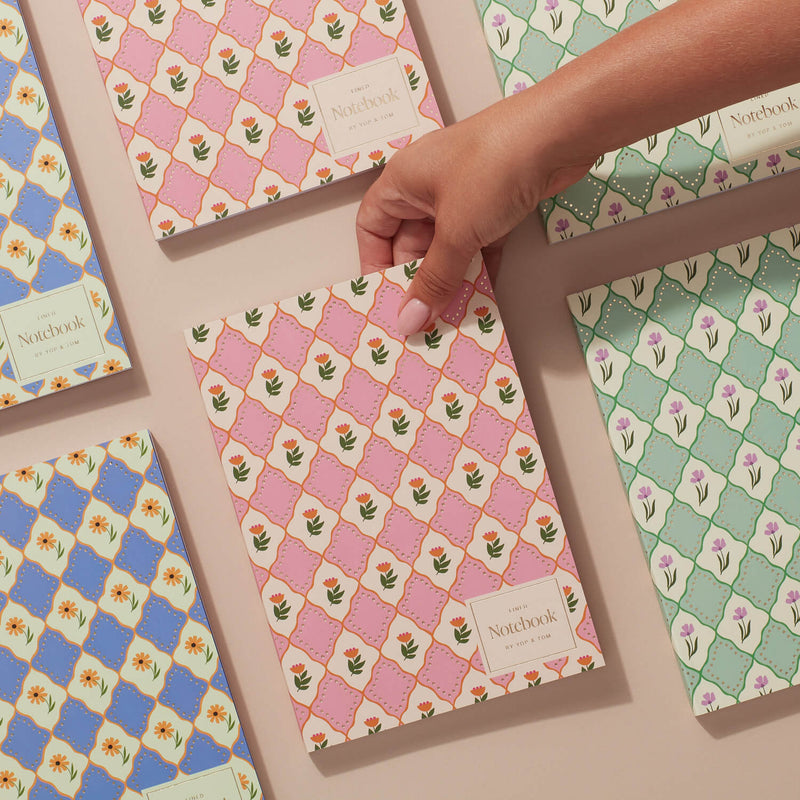
If you prefer a written approach, a lined notebook gives you plenty of space for prompts, reflections and monthly notes. A wellness journal works well if you want guided check-ins alongside moon prompts.
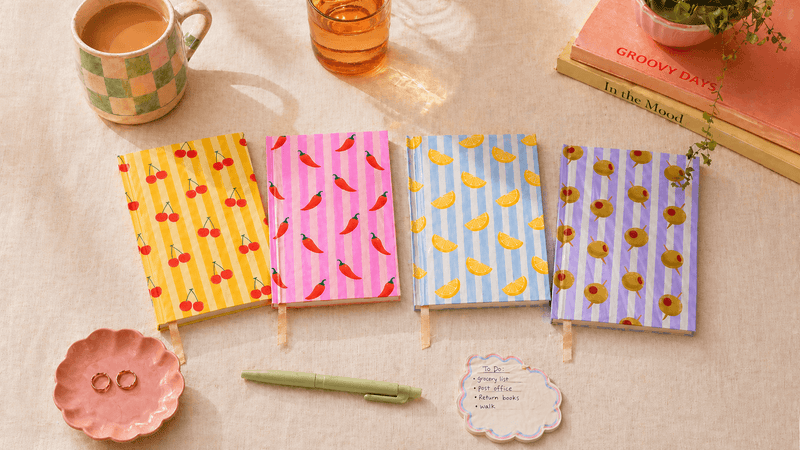
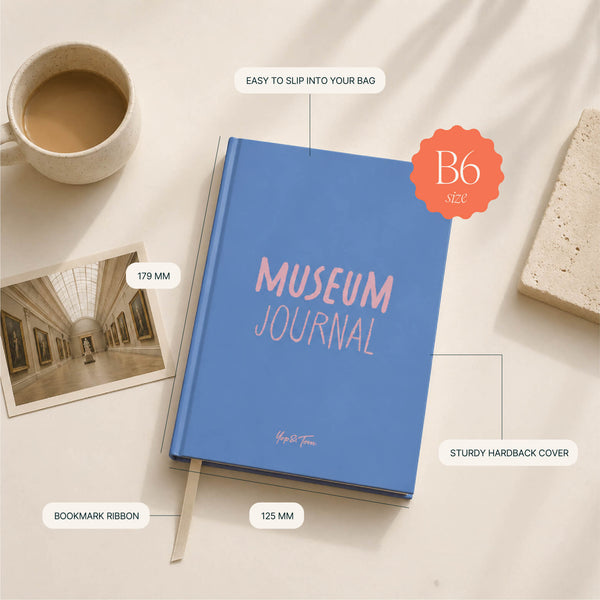
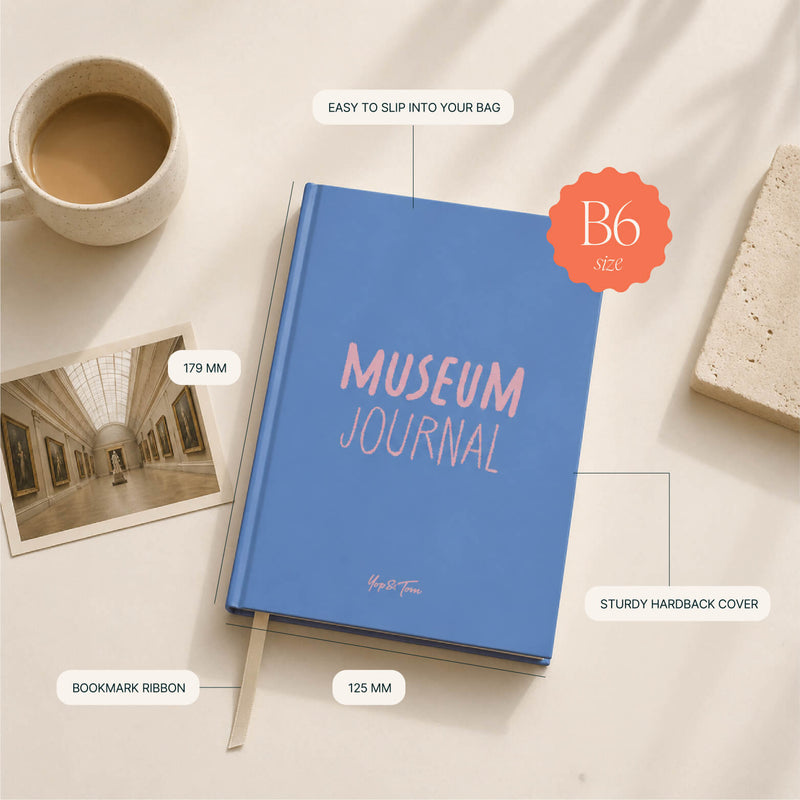
Prefer to illustrate the moon cycle? A museum journal or Luxe Pattern notebook lets you draw each phase, doodle your experience and combine writing with creative spreads.

Pick a pen you enjoy using
Your moon journal can be as minimal or as decorative as you like. You might practice journaling fonts, sketch what you see from your window, or keep pages plain and focused on the words. The important part is finding a pen that makes you want to return to the page.
What to journal during the new moon phase
Astronomers divide the lunar cycle into four main phases. The first is the new moon.
The new moon is your fresh start. It is a chance to release anything heavy from the past month and retreat for a moment before beginning again. Use this phase to prepare for something new.
Your new moon journal prompts
- What are you hoping to accomplish this month?
- What dream can you turn into an intention for the future?
- If anything were possible, what would you do over the next 30 days?
What to journal during the moon’s first quarter
The moon enters its first quarter phase roughly a week after the new moon. This is often when hurdles appear. Obstacles may try to slow the intention you set at the new moon.
Use this time for focused action. Make decisions that move you past those hurdles and bring your intention to life.
Your first quarter journal prompts
- What specific actions will you take to turn your intention into reality? How can you help yourself feel supported?
- What hurdles are you experiencing? How can you move past them?
- What is in your control right now that you can use to move forwards?

What to journal during a full moon
The full moon can be a period of heightened tension. You may experience strong emotions as the results of your recent work become visible.
Some people notice changes in sleep during this phase, as the mind and body adjust to what has happened and prepare for what comes next.
Your full moon journal prompts
- Take a moment to reflect on the last few weeks. What has been your biggest surprise?
- Write out everything you have accomplished during this lunar cycle. How does it feel to read that list?
- How can you celebrate your progress from the last few weeks?
What to journal during the moon’s last quarter
As you enter the last quarter, it is time to let go. Release the trials, frustrations and emotions that have surfaced over the past weeks, and prepare to begin again.
This is also a valuable time for forgiveness. Look back at what did not go to plan, acknowledge it, and set it free.
Your last quarter journal prompts
- What hurdles got in the way this month? How can you set them free?
- Complete this sentence: “I am proud of myself, because…”
- Release any negative energy from the last month onto the page. Let it stay there, outside of you.
2026 full moon calendar
Use this table to plan your moon journaling through the year. Times are shown in UK (London) and US Eastern time.
| Date | Full moon name | UK (London) | US Eastern |
|---|---|---|---|
| 3 Jan 2026 | Wolf Moon | 10:03 GMT | 5:03 AM EST |
| 1 Feb 2026 | Snow Moon | 22:09 GMT | 5:09 PM EST |
| 3 Mar 2026 | Worm Moon | 11:38 GMT | 6:38 AM EST |
| 2 Apr 2026 | Pink Moon | 02:12 BST | 9:12 PM EDT (1 Apr) |
| 1 May 2026 | Flower Moon | 17:23 BST | 12:23 PM EDT |
| 29 Jun 2026 | Strawberry Moon | 11:57 BST | 6:57 AM EDT |
| 29 Jul 2026 | Buck Moon | 01:36 BST | 8:36 PM EDT (28 Jul) |
| 28 Aug 2026 | Sturgeon Moon | 14:18 BST | 9:18 AM EDT |
| 26 Sep 2026 | Harvest Moon | 03:49 BST | 10:49 PM EDT (25 Sep) |
| 26 Oct 2026 | Hunter’s Moon | 16:12 GMT | 11:12 AM EST |
| 24 Nov 2026 | Beaver Moon | 06:53 GMT | 1:53 AM EST |
| 24 Dec 2026 | Cold Moon | 01:28 GMT | 8:28 PM EST (23 Dec) |
Choose your moon journal
Enough structure to get you started, and enough freedom to see where the moon takes you. A wellness journal or lined notebook gives you room for phase illustrations and monthly reflections.
Pair it with our guide to 21 types of journaling if you want to combine moon journaling with other techniques.

However you practice, the best moon journal is the one you open at the new moon and return to at the full moon. Start small, stay curious, and let the cycle do the rest.